
Artificial grass installation: what to expect on the day
One of the most common things people tell us after we’ve finished a job is that the process was smoother than they expected. They’d built it up in their heads as something disruptive and complicated. The reality is usually a single day, or two at most, and a yard they don’t recognise by the end of it.
If you’re booked in with us, or still deciding and want to know what you’re signing up for, here’s exactly how our installations work from arrival to handover.
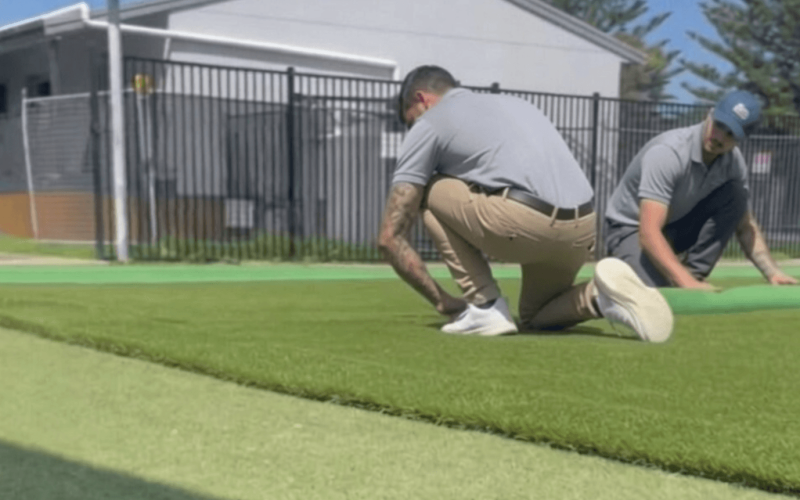
Before installation day
By the time our team arrives, the quote has already been done in person. We’ve seen the space, talked through how it’s used, agreed on the product, and given you a written quote with no surprises built in. The preparation you need to do is minimal: clear the area of furniture, toys, or anything else sitting on the existing surface. That’s broadly it.
We handle everything else from arrival.
Step 1: Removing the existing surface
The first thing we do is strip out whatever is currently there. Existing lawn, weeds, loose soil, old turf if there’s been a previous installation. Everything comes up. The depth we excavate to depends on the site conditions and the finished height we’re targeting, but it’s typically around 75 to 100mm below the surrounding surface level.
All the material we remove is taken away by us. You’re not left with a pile of old lawn and soil sitting in the driveway.
Step 2: Base preparation
This is the most important part of the whole process, and the one that most directly determines how the finished lawn performs over the next 10 to 20 years.
Once the area is excavated, we lay a crushed granite or road base layer and compact it down properly. Compaction is not a step you can rush. It’s what prevents the surface from shifting, developing soft spots, or pooling water in places it shouldn’t. We’ve been called in to assess installations that failed early, and inadequate compaction is almost always part of the story.
Over the compacted base, we lay a geotextile weed barrier. This prevents any remaining weed seeds from pushing through the turf over time without affecting drainage. We finish the base with a levelling layer of sand or fine aggregate, checked with a level before anything else goes down.

Step 3: Laying the turf
The turf goes down in rolls. We plan the layout before we cut anything, because minimising joins and positioning them correctly matters for the finished appearance. Joins run in the same direction as the blade to make them as invisible as possible.
Once the layout is confirmed, we cut the turf to fit the space, including any curves, corners, or obstacles like garden beds, trees, or drain covers. Precision cutting around these details is something that separates a quality install from one that looks rough around the edges. Literally.
Step 4: Securing and joining
Individual turf sections are joined using high-strength adhesive tape and seaming glue along the join line. The sections are then pinned or nailed around the perimeter at regular intervals to hold the edges firm and prevent any lifting over time.
Edge finishing is one of the areas where the quality of an installation is most visible. A clean, firm edge where the turf meets a garden bed, path, or retaining wall looks sharp and stays that way. A poorly secured edge lifts, shifts, and becomes a tripping hazard within a year or two.
Step 5: Infill and brushing
Once the turf is laid and secured, we spread infill across the surface and work it down between the fibres. Infill gives the turf its weight and stability, helps the fibres stand upright, and plays a significant role in drainage performance and surface temperature. The type of infill we use depends on the product and the application. For pet-friendly installs, sports surfaces, and high-heat situations, we use infill that is specifically suited to those conditions.
After the infill is in, we go over the entire surface with a power broom. This is the step that brings the lawn to life. The fibres stand up, the surface levels out, and the lawn starts looking exactly how it’s going to look for the next 15-plus years.

Step 6: Handover
Before we leave, we walk you through the finished result and cover a few basics: how to brush the fibres to keep them upright, how often to rinse the surface, what to do if you notice anything in the first few weeks, and who to contact under the warranty if needed.
We clean up the site completely. Off-cuts, packaging, any material from the excavation. We don’t leave anything behind.
How long does it take?
Most residential installs on the Central Coast are completed in a single day. Larger yards, complex shapes, or jobs with significant base preparation needs might run into a second day. We give you a clear timeline at the quote stage so you know what to plan around.
We work efficiently but we don’t rush base preparation. That’s the one part of the process where speed is the enemy of quality, and it’s the one part that’s genuinely difficult to fix after the fact.
What it looks like when we’re done
By the end of installation day, the yard looks finished. Not “pretty good for a new install” finished. Actually finished. The fibres are upright, the edges are clean, and the surface is ready to use.
We’ve had customers walk out to check on progress at 4pm and find us packing up with a completed lawn where there was bare dirt that morning. That’s the part people tend not to expect, and it’s the part that tends to make the biggest impression.
Ready to get started? Book a free quote and we’ll come out, assess the space, and give you a clear picture of what installation day will look like for your yard.
Frequently asked questions
Most residential installations are completed in a single day. Larger or more complex jobs may run to two days. We give a clear timeline at the quote stage so you know exactly what to plan around.
Clear the area of furniture, outdoor toys, and anything sitting on the existing surface. We handle everything else from arrival, including removal of the existing lawn or surface material and all excavation waste.
The base is what the turf sits on for the next 15 to 20 years. Proper compaction prevents shifting and uneven surfaces. Correct drainage prevents pooling. A solid weed barrier prevents growth pushing through the turf. Cutting corners on base preparation is the most common reason artificial grass installations fail early.
Yes. The lawn is ready to use once the installation is complete and we’ve done the final brush. We’ll let you know if there’s anything specific to be aware of in the first few days, but there’s no curing time or waiting period.
Call us on 0412 920 261 or fill in the free quote form on our website. We’ll arrange a time to visit your property, assess the space, and provide a clear written quote with no obligation.