
Artificial grass for schools and childcare centres: what you need to know
We’ve completed a number of commercial installations at childcare centres and schools across the Central Coast over the years, and the conversations that lead to those jobs tend to follow a similar pattern. A director or principal has been dealing with a muddy, worn-out playground for too long. Wet weather is keeping kids inside. Staff are spending time managing a surface that just isn’t working. And someone has started asking whether there’s a better solution.
There usually is. But commercial installations, particularly ones involving children, come with a different set of questions to residential work. Here’s what you need to know before you make a decision.
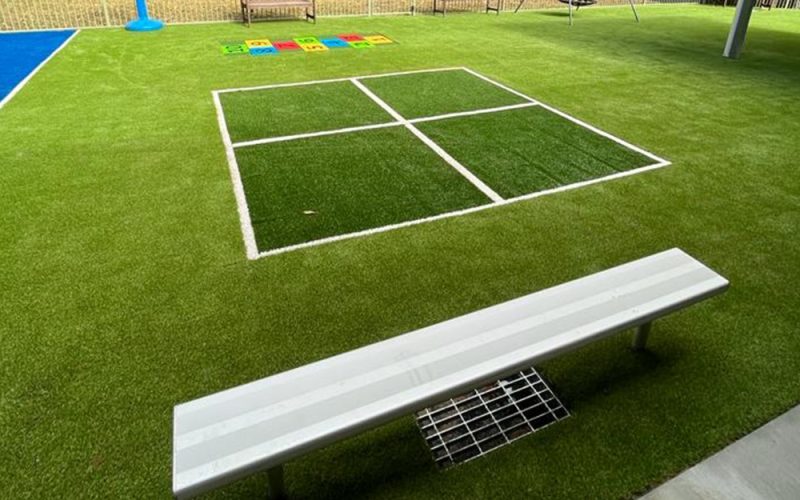
Is artificial grass safe for children?
Yes, and this is the question that tends to matter most to directors, principals, and parents. The short answer is that quality artificial grass is non-toxic, free of harmful chemicals, and designed to be safe for children to play on for extended periods.
The products we use for commercial installations meet Australian safety standards and are specifically suited to high-use environments. They don’t harbour the bacteria and parasites that can accumulate in wet soil, they don’t produce allergens the way some natural grasses do, and they stay cleaner and more hygienic in wet conditions than dirt or natural turf.
For installations near play equipment, the critical safety consideration is fall height attenuation, which is the surface’s ability to absorb impact. The right infill and pile combination can meet the relevant Australian standards for fall protection. This is something we assess and specify for every school and childcare installation we do.
What makes commercial installations different to residential ones
The core installation process is the same. Excavation, base preparation, drainage, turf laying, edge finishing. But commercial jobs have a few additional considerations that residential work doesn’t.
Volume of use
A childcare playground gets used by dozens of children every day of the week. A school oval might see hundreds of kids across multiple sessions. That level of traffic demands a more hardwearing product than a residential backyard. We select products for commercial use that are specifically rated for high-traffic applications, with denser fibre construction and backing systems designed to hold up under sustained pressure.
Drainage requirements
Puddles on a playground are both a safety issue and a hygiene one. Commercial artificial grass installations need a drainage system that clears water quickly and completely, leaving the surface usable within minutes of rain stopping. The base preparation on commercial jobs is designed with this specifically in mind.
Hygiene and cleaning
Schools and childcare centres have cleaning regimes that need to extend to the outdoor surface. Artificial grass is significantly easier to maintain hygienically than natural turf or bare soil. It can be rinsed down, it doesn’t harbour mud, and there’s no soil for bacteria to accumulate in the same way.
We provide maintenance guidance with every commercial installation so that the cleaning team understands how to keep the surface in good condition. It’s simpler than most people expect.
Fall protection
For installations adjacent to play equipment, the surface needs to meet the relevant Australian Standard for playground surfacing, AS 4422. This covers the critical fall height the surface can protect against based on the height of the equipment. Not all artificial grass meets this standard, and not all installers specify to it.
We work through the specific equipment heights and fall zones on every school and childcare installation, and select the product and infill combination that meets the required standard for that space. If you’re replacing a surface under or around existing equipment, this is a conversation worth having early in the process.
What a typical school or childcare installation looks like
Every job starts with a site visit. We look at the space, talk through how it’s used, assess the existing surface and drainage, identify any equipment fall zones, and come back with a detailed written quote.
Installation is usually completed during school holidays or over a weekend to minimise disruption to the facility. A typical childcare outdoor area or school playground section takes two to three days depending on size and complexity. We aim to leave the site clean, safe, and ready to use as soon as the installation is complete.
The 8-year warranty applies to commercial installations the same as residential ones, covering both the product and the workmanship.
Common spaces we install in schools and childcare centres
- Main outdoor play areas and playgrounds
- Under and around climbing equipment and play structures
- Shaded outdoor learning areas
- Multipurpose courts and hard-surface alternatives
- Entry areas and pathways that connect indoor and outdoor spaces
- Sensory garden areas and quieter play zones
What childcare directors and school principals tell us after installation
The feedback from commercial clients tends to focus on a few consistent things. The surface stays usable through weather that would have previously kept kids inside. Cleaning and maintenance is simpler than expected. Parents notice and comment positively. And staff aren’t spending time managing a surface that was always one wet week away from becoming a mud pit.
One childcare director on the Central Coast told us that before the installation, they were closing the outdoor area for days at a time after heavy rain. After installation, children were back outside within an hour of rain stopping. For a childcare centre where outdoor play is a core part of the program, that’s a significant operational difference.
How to get started
If you’re managing a school or childcare facility on the Central Coast and want to explore what artificial grass could look like for your space, the first step is a site visit. We’ll come out, assess the space, and provide a detailed commercial quote with no obligation.
Commercial quotes are handled separately to residential ones and we’re experienced in working around the scheduling requirements of schools and childcare facilities, including holiday-period installation where that’s needed.
To request a commercial quote, get in touch with our team or call us directly on 0412 920 261.
Frequently asked questions
Yes. Quality artificial grass is non-toxic, free of harmful chemicals, and meets Australian safety standards for commercial use. For installations near play equipment, we specify products that meet AS 4422, the Australian Standard for playground surfacing and impact attenuation.
The right product, installed correctly, can meet AS 4422 for fall height attenuation under and around play equipment. This depends on the product specification and infill used, which is why we assess each commercial installation individually rather than applying a one-size-fits-all approach.
Most school and childcare installations are completed within two to three days. We work around facility schedules and are experienced in completing commercial jobs during school holidays or over weekends to minimise disruption.
Artificial grass in a commercial setting needs regular rinsing to keep the surface clean and hygienic, and periodic brushing to keep the fibres upright in high-traffic areas. We provide a maintenance guide with every commercial installation. The cleaning requirements are straightforward and significantly less demanding than maintaining natural turf.
Yes. We complete commercial installations at schools, childcare centres, and other commercial facilities across the Central Coast. We’re based in Berkeley Vale and service the entire region. Get in touch to arrange a site visit and commercial quote.
Every installation we complete, including commercial jobs, is backed by an 8-year warranty covering both the product and the workmanship. Commercial clients receive the same warranty commitment as residential customers.