
Is artificial grass worth it? An honest guide for Central Coast homeowners
We get this question a lot. Someone’s been staring at their patchy lawn for the third summer in a row, they’ve Googled artificial grass late at night, and now they’re sitting with us at the kitchen table wondering whether it’s actually going to be worth the money.
Honestly? That’s exactly where we want people to be. Asking questions. Thinking it through. Because after nearly ten years installing artificial grass up and down the Central Coast, we’ve seen both sides — the installs that genuinely changed how a family uses their home, and the rare cases where we’ve told someone it’s probably not the right fit for them. So here’s our honest take.
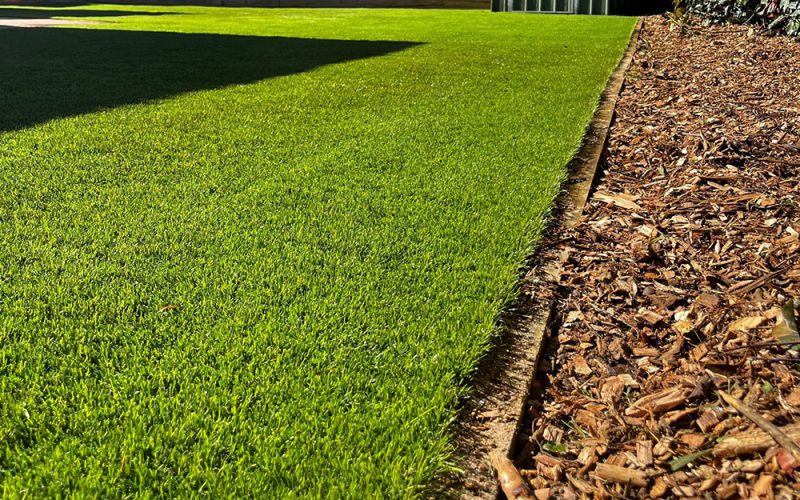
What does “worth it” actually mean?
It depends on what you’re comparing it to. If you’re comparing artificial grass to a perfectly maintained natural lawn that you love tending on weekends, it might not be for you. And that’s a completely fair answer.
But that’s rarely the real comparison. Most people on the Central Coast we speak to aren’t choosing between artificial grass and a lush, thriving lawn. They’re choosing between artificial grass and a lawn that’s brown through summer, muddy through winter, patchy where the dog runs, and dead under the trampoline. Framed that way, the answer is almost always yes.
The honest pros and cons
We’re not going to tell you artificial grass is perfect. Nothing is. But here’s what we see from the people who’ve had it installed with us.
What customers genuinely love
- No more mowing. This is the big one. We hear it in almost every review we receive.
- The lawn looks the same in January as it does in July. Green, even, and tidy regardless of rain or drought.
- No mud. Kids and dogs can come inside without the floors paying for it.
- Maintenance is minimal. A brush and a rinse every now and then is all it takes.
- It handles heavy foot traffic well. Natural grass in a busy backyard simply wears down. Synthetic turf doesn’t.
- Every installation we do comes with an 8-year warranty. That’s peace of mind backed in writing.
Where people sometimes hesitate
- The upfront cost is higher than turf roll or seed. That’s real, and we won’t pretend otherwise.
- It can get warm on very hot days in direct sun. Worth knowing before you commit (more on this below).
- It doesn’t feel exactly like natural grass underfoot. Most people are pleasantly surprised by modern synthetic turf, but it’s not identical.
Three questions we get asked at almost every quote
Will artificial grass actually suit my yard?
In our experience, yes — almost always. Artificial grass works in full sun, deep shade, small courtyard spaces, large open backyards, on slopes, around pools, and in awkward spots where nothing natural will grow properly.
The one situation that needs extra attention is poor drainage. If your yard already holds water after rain, we deal with that at the base preparation stage before a single roll of turf goes down. We assess every site before we quote, and if there’s something that needs addressing, we’ll tell you clearly and factor it in.
Does artificial grass get too hot?
This is the question we probably field most often, and it’s a fair concern. Synthetic turf does absorb more heat than natural grass. On a 35-degree Central Coast afternoon with no shade, a fully exposed artificial lawn will be noticeably warm underfoot.
Here’s the context that tends to reassure people though. Most of us aren’t walking barefoot across a sun-baked lawn at 2pm in February. Shaded spots — under a pergola, near the house, beneath a tree — stay significantly cooler. A quick run of the hose drops the surface temperature within minutes. And some of the infill products we use are specifically engineered to reduce heat retention.
For the vast majority of our customers, heat is a consideration rather than a dealbreaker. But we’d rather you know about it upfront than discover it on a hot day in December.
Can pets ruin it?
We hear this one especially from dog owners, and we understand why. Dogs can be absolutely ruthless on natural lawns. Digging, running the same track until it’s bare, leaving patches that never quite recover.
Our pet-friendly turf is built with exactly this in mind. The fibres resist digging well. Urine drains straight through the backing rather than pooling on the surface. Cleaning up is usually just a hose. And here’s the thing we always point out — whatever your dog is currently doing to your natural lawn is almost certainly more damaging than anything they’d do to synthetic turf.
Is artificial grass right for you? A simple checklist
Artificial grass tends to be a great fit if most of these apply:
- You want a lawn that looks good year-round without a lot of upkeep
- You’re tired of mowing, watering, or battling a patchy lawn through dry summers
- You have kids or pets who actually use the backyard
- Your yard has high foot traffic, awkward shaded patches, or areas where grass won’t grow
- You have a pool area, courtyard, or tricky space where natural grass has never thrived
- You enjoy tending a natural lawn and it’s something you actively value
- Your yard has significant drainage problems that haven’t been resolved (though we can often address this as part of the job)
What actually makes the difference
We’ve been called in to look at installs that have gone wrong, and the pattern is almost always the same. The grass itself was fine. What failed was the preparation underneath it.
When base preparation is rushed or corners are cut — inadequate compaction, poor drainage, the wrong infill — you end up with turf that shifts, bubbles, or holds water in the wrong places. It looks fine for a year and then starts to show.
Our process puts as much emphasis on what goes below the surface as what goes on top of it. Proper compaction, the right drainage layer, a weed barrier that actually holds, and infill that suits the specific use of the space. It takes a little longer to do it properly. It’s also the reason our installs are still looking sharp years later.
The turf products we use are manufactured in Australia and designed for Australian conditions. That matters on the Central Coast, where summers are long, UV is intense, and the climate asks a lot of outdoor surfaces
So, is it worth it?
For most Central Coast homeowners, yes. Genuinely.
Not because we’re trying to sell you something — but because we’ve sat in enough backyards and seen enough before-and-afters to know what a real difference it makes. A yard that felt unusable for half the year becomes a place the kids actually play in. A courtyard that was always dry and dusty becomes somewhere you actually want to have people over.
The best way to find out if it’s right for your specific space is to get a free quote. We’ll come out, have a proper look at the yard, and give you an honest assessment — including if we think there’s any reason it might not be the right fit.
Frequently asked questions
Yes. The combination of low maintenance, consistent appearance year-round, and long product life makes it a sound long-term investment for most homeowners. It suits the Central Coast climate well, particularly through the dry summer months when natural grass tends to struggle.
Quality artificial grass, properly installed, typically lasts 15 to 20 years. Every installation by Coastal Evergreen is backed by an 8-year warranty covering both the product and the workmanship.
Very little. A light brush every few weeks to keep the fibres upright and an occasional rinse to clear dust and debris is all most lawns need. Pet owners benefit from a more regular hose-down, but it’s still a fraction of the effort natural grass requires.
Yes. Our team installs on sloped and uneven ground regularly across the Central Coast. The key is solid base preparation to ensure the turf sits correctly and drains as it should.
Yes. The products we install are non-toxic and free of harmful chemicals. They’re designed to be safe for children to play on, and the surface keeps mud and debris from being tracked back into the house.
Fill in the free quote form on this website or call us directly on 0412 920 261. We’ll arrange a time to visit the property, assess the space properly, and provide a detailed quote with no obligation.
For a balcony, choose a soft and comfortable artificial grass suitable for barefoot walking. Opt for a polyethylene turf with a medium pile height to provide cushioning and drainage. Lighter colours will reflect heat better, making it more comfortable in sunny weather.