
Putting green at home: A complete guide to installing artificial grass
When we talk about putting turf, we are talking about creating a smooth, consistent surface that behaves the same way every time you putt. Since we specialise in artificial putting turf, this guide focuses entirely on the materials, preparation and installation methods that give you a true roll and a long-lasting surface.
Over the years, we have seen backyard greens fail due to rushed base preparation, poor drainage, or seams that were never properly aligned. These small details have a big impact on how your ball behaves. The good news is that once you understand the process, you can achieve a surface that feels reliable under your feet and delivers predictable speed.
In this guide, we share the approach we use on professional installations across Australia. You’ll find explanations of how artificial putting turf is engineered, how to prepare your sub-base properly, how to lay and join turf cleanly and how to maintain the green so it stays consistent. You’ll also find tool and material lists, installation steps, troubleshooting tips and cost breakdowns to help you plan your project with confidence.
This comprehensive guide walks you through the complete installation process, from initial planning to long-term maintenance. Whether you’re considering a DIY approach or professional installation, understanding each step ensures you make an informed decision and achieve amazing results that last for years.
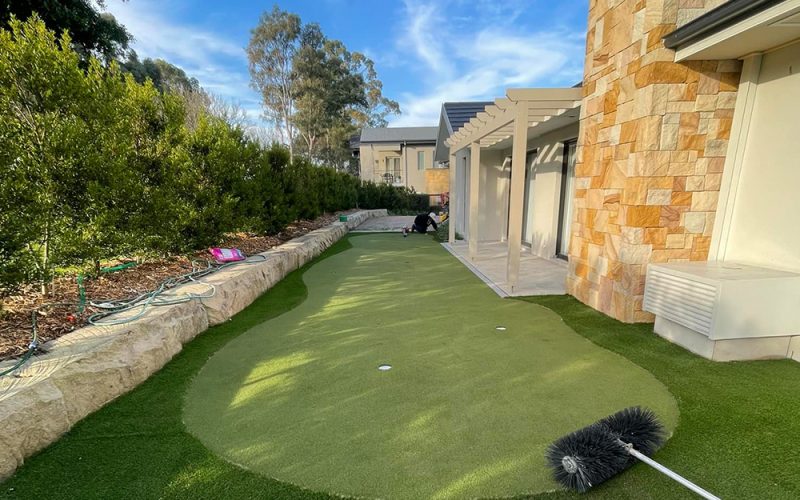
What are the different types of turf for putting?
Putting turf options include artificial putting turf and portable indoor mats. We focus on artificial putting turf because it offers the most realistic outdoor roll and stays consistent in all weather.
Artificial putting turf is designed with engineered pile height and fibre density so the ball holds its line. Portable mats are handy for quick drills but don’t offer true outdoor performance or drainage.
Here is a simple comparison:
- Artificial putting turf
- Predictable roll
- Adjustable speed via pile and infill
- High durability, low ongoing maintenance
- Portable or indoor putting mat
- Good for short-game drills, limited roll distance
- Low cost, lower durability outdoors
For a real putting experience, artificial turf is the clear choice. With the right preparation and materials, you can create a green that feels solid underfoot and stays consistent year-round.
What are the different types of turf for putting?
Artificial turf provides consistent playability because the fibres and infill maintain uniform surface friction and a predictable roll. Rain does not affect speed and the surface stays true even after years of use. This is why so many people choose artificial putting turf for backyard practice.
Another clear advantage is reduced maintenance. There is no mowing, no fertiliser, no soil management and no seasonal patching. Once the green is installed correctly, your only regular tasks are brushing and occasional infill checks.
With artificial turf, you are choosing low maintenance and reliable performance. It becomes a practice surface you can rely on every day of the year.

Which turf materials are best for putting greens?
Samples of artificial and natural turf materials for putting greens
When selecting artificial putting turf, focus on three essentials:
- Low pile height for a clean and fast roll
- High stitch density for stability and ball control
- Tight tufting pattern to reduce wobble and fibre movement
- Good drainage is also crucial.
- Backing perforations and structured channels help water move through the turf quickly so the surface stays firm after rain.
Infill plays a big role in speed. Fine silica sand or specialised putting green infill lets you fine-tune pace. Lighter infill gives quicker speed, while a slightly heavier layer softens the feel.
Choosing quality materials is the foundation of a putting green that performs the way you want it to.
How do you prepare the ground before putting turf?
Proper ground preparation is the reason some putting greens last for years while others start to fail early. A stable, well-draining sub-base sets up the turf for a smooth, consistent roll.
Start by assessing your soil type and slope. Areas with poor drainage or soft soils might need deeper excavation to ensure the ground stays firm. Remove vegetation, level out high and low spots and lay a weed membrane if required. From there, build a compacted aggregate base that will support the turf evenly.
This stage is where you prevent wrinkles, hollows and drainage issues later on.
Ground-prep tools, levelling tools and installation materials list
- Ground-prep tools: rakes, shovel, wheelbarrow, plate compactor
- Levelling and measurement tools: laser level or spirit level, straight edge, string lines
- Installation materials: artificial turf rolls or mats, joining tape, turf adhesive, edging restraints
What tools and materials are needed for turf installation?
Organising your installation tools early keeps the whole project running smoothly. For ground preparation, use a plate compactor, rakes and shovels to build a 50 to 100 millimetre compacted base of crushed rock or crusher dust.
For the installation itself, gather:
- Artificial putting turf
- Joining tape
- Polymer adhesive
- Coarse sand infill
- Timber or metal edging
Finishing tools include seam rollers, utility knives, grooming brushes and your safety gear. Having everything ready helps you create clean seams and a perfectly flat finish.
How do you level and compact the soil for turf?
A consistent roll starts with a firm, evenly compacted sub-base. Build it in layers using crushed rock or crusher dust, compacting each layer thoroughly. This prevents uneven settling later.
Use your laser or spirit level to keep the surface even and maintain a gentle fall of one to two percent toward drainage points. This ensures water moves away rather than pooling under the turf.
The goal is a base that feels stable underfoot and stays solid through all weather.

What are the step-by-step instructions for a putting green?
We use a clear installation sequence to maintain accuracy and reduce mistakes.
Numbered installation checklist
Clear and compact the sub-base, confirm levels and falls, and install weed membrane if needed
Dry-fit turf rolls, align pile direction, mark seams and trim edges for a clean fit
Bond or sew seams, secure perimeter edging, apply infill and groom the fibres to final speed
Dry-fitting is crucial. It lets you adjust alignment before adhesive is used, ensuring every seam sits flat and every roll blends smoothly.
See some of our recent projects that follow these exact installation steps.
How do you lay and secure turf rolls or mats?
Start by unrolling each piece with the pile facing the same direction. This keeps ball roll consistent across the entire surface. Allow the turf to relax in the sun so it softens and any creases settle.
Trim edges using a straight guide and secure the perimeter using stakes, staples or fixed edging. If using adhesive, follow the recommended wait time and press seams firmly with a roller.
The care you take here determines how smooth and true the finished surface will be.
How do you join turf seams for a smooth surface?
Clean seams come from precise trimming and the correct joining method. Cut straight edges, place joining tape underneath and apply adhesive evenly. After joining, test each seam by rolling a ball gently across it. If the ball bumps or changes line, adjust the seam while the adhesive is still workable.
High-use areas benefit from reinforced joins. Once seams are set, brushing and infill blending help create a seamless look and uniform roll.
How do you maintain and care for your putting turf?
Artificial putting greens are simple to care for. Regular brushing keeps fibres upright and prevents debris from affecting ball roll. A deeper groom once a month helps redistribute infill and refresh speed.
Because the turf is synthetic, you do not need to worry about irrigation, fertilising or mowing. Your main focus is keeping the fibres clean and the infill balanced.
Maintenance schedule
- Light brushing and debris removal
- Weekly task
- Stiff brush, leaf blower
- Deep grooming and infill check
- Monthly
- Power broom, infill spreader
- Repair and patching
- As needed
- Utility knife, adhesive, seam tape

What cleaning and brushing methods keep artificial grass in top condition?
A stiff nylon brush is ideal for weekly maintenance, brushing in the direction of the pile. Use a leaf blower or low-pressure hose for larger debris. Avoid metal brushes or high-pressure washers because they can damage fibres or displace infill.
For stains, use mild detergent and rinse thoroughly. Remove pet waste promptly to prevent odour and bacteria.
Regular cleaning protects both the appearance and the playability of your putting surface.
How do you repair damaged or worn turf areas?
To repair a small tear or worn area, cut out the damaged section, check the base underneath and patch it with a matching piece of leftover turf. Bond the patch using seam tape and adhesive for a stable repair.
If an area has settled or sunk, you may need to rebuild that section of the base before replacing the turf. Larger issues or seam failures may require a professional installer to restore the surface properly.
What are common problems when putting turf and how can you avoid them?
Most problems come from base preparation or fastening issues. Wrinkles, bubbles, uneven speeds and seam lifting usually appear when the sub-base was not compacted correctly or edges were not secured strongly enough.
Three proactive tips to avoid common failures
- Compact the sub-base in layers to prevent future sinking
- Use strong edge restraints to stop turf movement
- Ensure proper falls and drainage materials to avoid water build-up
Prevention is always easier than repairing issues later.
How do you prevent turf wrinkles and bubbles?
Wrinkles form when turf is stretched too tightly or laid on an unstable base. Avoid pulling the turf aggressively. Let it relax in the sun and lay it gently into place. Use consistent fastening around the edges so the turf stays secure without tension.
Temperature also matters. Turf expands slightly in heat and stiffens in cold, so install it at a moderate temperature for the most stable results.
What causes drainage issues and how can you fix them?
Artificial putting turf needs a permeable sub-base so water can move through it. If drainage issues appear, it usually means the base lacks proper falls, the aggregate is too compacted or water has no escape path.
Short-term fixes include improving surface levels or creating temporary drainage channels. Long-term solutions involve rebuilding the base with a more permeable aggregate and adding proper drainage where needed.
Good drainage protects the turf and keeps the green consistent.
How much does putting turf cost and what are your budget options?
The total cost of a putting green depends on turf quality, base preparation and whether you install it yourself or use a professional. Higher quality putting turf is denser, more durable and provides a truer roll.
Labour costs change depending on site access, excavation needs and edging requirements. When planning, consider the three common installation approaches:
- Full DIY: lower labour cost but higher risk
- Hybrid: professional base preparation with DIY finishing
- Professional installation: highest reliability and fastest turnaround
Cost component
- Artificial grass material
- 30 to 120 per m²
- Higher density increases cost
- Sub-base materials and compaction
- 10 to 40 per m²
- Crusher dust, drainage layers, compaction
- Labour (professional install)
- 30 to 80 per m²
- Depends on access and complexity
What are the typical costs for materials and installation?
Premium putting turf costs more because it uses dense fibres and specialised backing designed for a consistent roll. Sub-base and drainage costs vary based on your soil type and how much excavation is needed.
DIY tools like compactors and power brooms add to your cost, so consider whether hiring a professional installer might be more efficient.
Understanding these costs helps you compare quotes fairly and plan your budget accurately.
Are DIY turf installations more affordable than professional services?
DIY can be more affordable at the beginning, but only if the work is done correctly. A poorly compacted base or a badly aligned seam can shorten the lifespan of your putting green and eventually lead to costly repairs.
Professionals bring experience, specialised tools and a smooth installation process. Many clients choose a hybrid approach where we prepare the base and they complete the finishing touches.
Your ideal option comes down to your skill level, time available and how flawless you want the finished surface to be.
Ready to get started?
Ready to build your own artificial putting green? Get in touch with our team at Coastal Evergreen and we’ll help you design a smooth, consistent surface that suits your home and your practice style. Give us a call or get an online quote today.